
What Is Drainage Lining Repair Using Patch Lining?
A targeted solution for localised drain damage
Patch lining is a targeted drainage lining repair technique. Instead of digging up the whole run or relining everything, we focus just on the damaged section. Think of it as a plaster for your pipe, only much stronger and designed to last for years.
A flexible liner, soaked in a specialist resin, is positioned exactly where the crack, hole, or joint problem is. Once it cures, it forms a new, solid sleeve inside the drain at that point, sealing leaks and restoring strength.
The best part, it is all done from existing access points, like manholes or inspection chambers. No need to rip up patios or cut through finished floors just to reach the fault.
How patch lining differs from full drain lining
Full drain lining repair coats a long length of pipe, often the whole run between two chambers. Patch lining is much more precise. It usually covers around a metre or so, sized to the defect and its immediate surroundings.
So if 95 percent of your drain is in good condition and only one small section has failed, a drain patch repair lets you fix that one area without paying to treat everything else unnecessarily. It is quicker, tidier, and often far more cost‑effective.
When Is Patch Lining the Right Drain Repair Option?
Cracks, fractures, and joint failures
Patch lining comes into its own when damage is focused in one place. For example:
- A short crack or fracture in a clay or plastic pipe.
- A leaking or slightly displaced joint.
- A small section where roots have found their way in.
In these situations, a drain pipe patch repair can be used to stop leaks, keep roots out, and reinforce the pipe without digging a single hole.
Isolated damage within otherwise sound drains
I have found that patch lining works brilliantly when most of the system is healthy but one or two spots keep causing trouble. A CCTV survey shows the rest of the pipework is fine, and the flow is good, so it makes sense to repair just the bad patch rather than overhaul the lot.
If, on the other hand, the camera reveals repeated issues along long lengths, or sections that have collapsed, then patching alone is not the answer. In those cases, we will usually talk you through alternatives, such as combining patching with other methods or looking at full drain lining solutions for more extensive deterioration.
How Patch Lining Works
Inspection and preparation
Every good repair starts with a clear diagnosis. That is where a CCTV drain inspection comes in. We send a camera through the drain to:
- Confirm exactly where the damage is.
- Check how long the affected section is.
- Make sure there are no other serious problems nearby.
Once we know what we are dealing with, the pipe is cleaned, typically using high‑pressure jetting. This removes debris, scale, roots, and anything else that could stop the patch from bonding properly. A clean surface is critical if you want the repair to last.
Installing and curing the patch
The repair process itself is straightforward once the prep is done:
- A liner is cut to the right length and impregnated with resin.
- It is wrapped around an inflatable packer, which is then fed into the drain and positioned at the defect.
- Using the camera, we check it is exactly where it needs to be.
- The packer is inflated, pressing the liner firmly against the inside of the pipe.
- The resin cures, forming a hard, structural sleeve bonded to the host pipe.
- The packer is removed, leaving the patch in place.
We then run the camera through again to check the drain patch repair looks right, that the flow is not restricted, and that the problem area is fully covered.
Benefits of Patch Lining for Drainage Repair
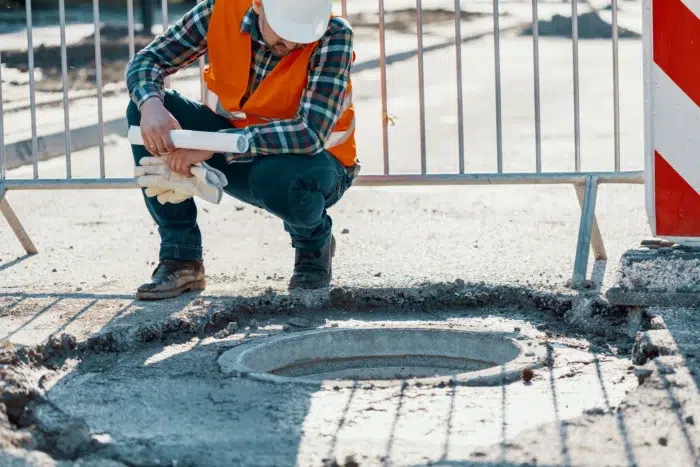
No excavation or surface disruption
This is often what people appreciate most. Patch lining is a no‑dig drain repair, so there is usually no need to disturb:
- Driveways or car parks.
- Patios, decking, or lawns.
- Internal floors or finished surfaces.
If you have just landscaped a garden or laid new paving, the idea of someone digging through it is understandably painful. Patch lining avoids that in many cases, preserving what is already there.
Fast installation and minimal downtime
Because it uses existing access points and focuses on small sections, patch lining can often be completed in a single visit. From inspection to signing it off on camera, the whole process can sometimes be measured in hours rather than days.
For homes, that means less disruption to everyday life. For commercial sites, it means less downtime, fewer access restrictions, and less impact on staff or customers.
Long-lasting structural repair
A common question is, “Will it actually last, or is this just a temporary fix?” When done properly with good materials, patch lining is designed as a permanent drainage lining repair, not a short term patch up.
The cured liner forms a tough, structural sleeve that resists further cracking and keeps roots out. It also helps stabilise joints that have moved slightly, which can prevent minor issues from becoming major ones.
Patch Lining vs Other Drainage Repair Methods
Patch lining vs excavation
Excavation still has its place, especially where pipes have collapsed or there is no way to get lining equipment into position. But it is invasive and often costly, not just for the pipe repair but for reinstating surfaces afterwards.
Patch lining lets you deal with many types of localised damage without opening up the ground. Fewer labour hours, less reinstatement, and far less upheaval. For many people, that is a big relief.
Patch lining vs full drain lining
Full lining refurbishes long sections of pipe. It is ideal where damage is widespread, or older systems are showing multiple signs of failure.
Patch lining is more of a precision tool. It shines when one or two spots are letting the side down, but the rest of the pipework is doing its job. The best approach is always based on what the CCTV shows, and it is not unusual to use a mix, patching one section and fully lining another.
Limitations of Patch Lining
When patch repairs are not suitable
To keep things honest, there are times when patch lining is not the right answer. For example:
- The pipe has fully collapsed and there is no clear passage.
- There are numerous serious defects along the same run.
- The pipe is so badly deformed or restricted that equipment cannot be safely positioned.
In those situations, we will talk you through alternatives rather than trying to make patch lining fit where it should not. The goal is always a reliable, long‑term fix, not a quick win that will fail later.
Importance of accurate diagnosis
Because patch lining is so targeted, getting the diagnosis right is crucial. Skipping a proper CCTV drain inspection just to save time or money can backfire if there are hidden issues further along the pipe.
That is why we always recommend, and provide, a thorough survey first. Once you understand the true condition of the system, you can make an informed decision about whether patch lining, full lining, excavation, or a combination makes most sense.
What to Expect From a Professional Patch Lining Service
Assessment, repair, and verification
A good patch lining service should feel structured and transparent. Typically, you can expect:
- An initial chat about the symptoms you are seeing, such as repeat blockages or damp.
- A CCTV survey to pinpoint faults and assess suitability for drainage lining repair.
- A clear explanation of your options, with costs and likely disruption.
- The patch installation itself, carried out from existing access points.
- A final CCTV check so you can see the completed repair for yourself.
By the end, you should know what was wrong, what was done, and where the repaired section sits within your system.
Aftercare and maintenance advice
Once the repair is complete, a bit of sensible aftercare goes a long way. You might get advice on:
- How to avoid future build-up or misuse of the system.
- Any other sections to keep an eye on, based on the survey.
- When to consider more extensive work, like full drain lining solutions, if the rest of the system starts to show its age.
The idea is to give you control and clarity, not to leave you guessing about what might go wrong next.
Speak to a Drainage Repair Specialist
If you are facing cracked, leaking, or troublesome drains and the thought of excavation fills you with dread, patch lining could be exactly what you need. It is a smart, focused form of drainage lining repair that fixes the problem area while leaving the rest of your property alone.
Whether you are a homeowner, landlord, facilities manager, or responsible for a commercial building, we can take a look, explain things in plain English, and recommend the most sensible way forward.
You can explore our wider professional drainage repair services, see how we use CCTV drain inspection to pinpoint faults, and compare patch lining with our full drain lining solutions if your system needs more extensive work.
When you are ready, get in touch to request a drainage repair assessment. We will help you understand what is going on underground, and put things right with as little disruption as possible.